

High Elves
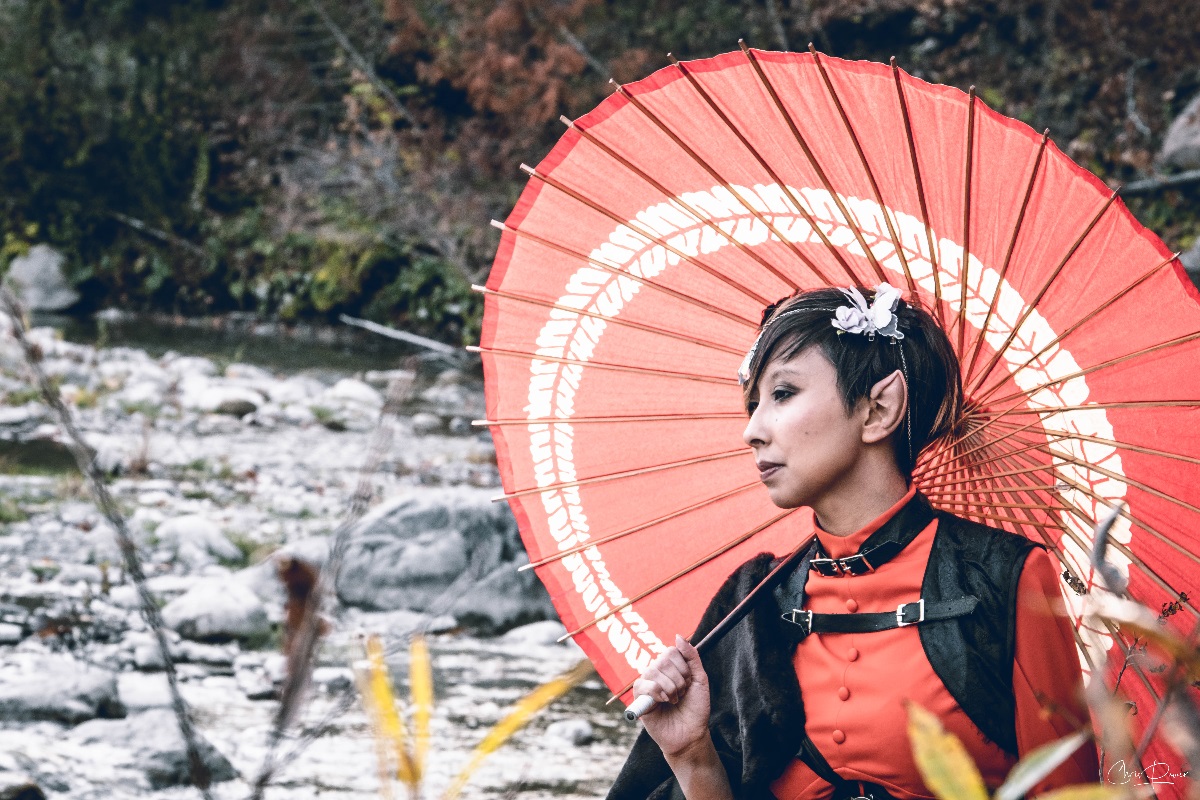
Like all their Thalan cousins, High Elves, known to themselves as the Deminis’Thalan, are a long lived race. Artistically and magically inclined, they migrated west following the humans after the sundering of the elven races and established their homeland, the great kingdom of Suvant. Though Suvant was destroyed in 2261 during the War of Amaranthia, surviving High Elves continue to inhabit Day’ten island and live as minority populations in other kingdoms across the continent. They are equally at home in comfortable elven communities or secluded forest villages.
High Elves are distinguished by their unique philosophy toward other races and their revolutionary approach to magical education. Unlike their elven cousins, High Elves chose to understand and sympathize with humanity’s “lust for existence,” leading them to develop a deep appreciation for the passion that drives shorter-lived races. This philosophical foundation shaped their creation of the first systematic universal magical education program, ensuring that even peasants received formal instruction in the magical arts, a practice that made Suvant unique among the nations of Arthos.
The High Elven military tradition of Bladesingers, elite warriors who weave magic and swordplay into elaborate dance-like combat, became legendary across the continent. These master combatants exemplified the High Elven ideal of seamlessly blending magical and martial excellence. Following Suvant’s catastrophic fall, Day’ten island has emerged as the de facto capital of High Elven civilization, where traditional fishing and agricultural communities now preserve and adapt their ancient cultural heritage.
Though graceful and wise, High Elves are viewed by others as a condescending and arrogant people, often causing friction when interacting with other races through ‘unintentional’ slights. Their merit-based social structure historically allowed for remarkable social mobility, though the destruction of their elaborate noble house system has forced adaptation to more pragmatic governance structures. Worship of Ll’yandra is most common among the High Elves, but with few exceptions all are free to worship as they will in their cities and villages.
Language: French
Life Expectancy: 700 – 1000 years
| Child | 1 – 15 |
| Teenager | 16 – 20 |
| Young Adult | 21 – 50 |
| Mature | 51 – 100 |
| Middle Age | 101 – 399 |
| Old | 400 + |
Contents
History
After the sundering of the Elven Races, the faction that would become the High Elves emerged from the Grey Elven parliament’s division into five distinct groups following the catastrophic human rebellion. When humans violently overthrew their Grey Elven mentors, murdering the High Council of Light and burning the Grey Elven capital of Tse Maigrindof, the surviving parliament fled to the deep woods to decide their response. The High Elven faction “desired to understand the actions of the humans,” and even went so far as to sympathize with them, believing humans possessed “a lust for existence that was at times difficult to invoke in a people that possessed a lifespan of almost a thousand years.”
Seeing in the humans a willfulness and tenacity that they found intriguing, these elves followed them on their migration westward. Believing then that the humans would come to be a dominant power, and understanding that at the core of their potential lay their passion for accomplishment within their short lifespans, they settled their first kingdom, Suvant, near predominantly human lands. In old folklore, it is said that during this migration, the High Elves assisted Kael, or Kaelyn as they called him, in guiding his people. Some ancient texts surviving from the period have given scholars doubts as to Kael’s humanity, with a small faction believing him to have been a High Elf the whole time.
Suvant: The Lost Kingdom
Foundation and Golden Age
Suvant was established as a small nation southeast of the Kingdom of Tiefanue, becoming the political and cultural center for High Elves across the continent. Despite its modest size, the kingdom wielded enormous influence, known as “The Homeland” to scattered High Elven communities everywhere. The kingdom distinguished itself through peaceful foreign policy and advanced magical education, with Suvant’s Guilds of Magic becoming renowned throughout the known world.
The kingdom pursued an isolationist policy, living peacefully with their neighbors and the forests around them. High Elves implemented a revolutionary system of universal magical education, ensuring that even peasants received formal instruction in the magical arts. This commitment to magical knowledge made Suvant unique among the nations of Arthos and cemented its reputation as the pinnacle of High Elven civilization.
The Mysterious Disappearance
When the Grey Elves vanished in 2234, Suvant itself disappeared completely two years later in 2236 – structures and all. This event marked a devastating turning point for the High Elves, as their ties to the forest and the mortal plane began to weaken. Many of the remaining scattered High Elves of the continent returned to the area and founded Day’ten, a settlement near the site of Suvant’s disappearance, hoping for answers that never came.
Return as a Floating City
In 2250, Suvant dramatically reappeared as a magnificent floating city suspended hundreds of feet above Day’ten island. Held aloft by four massive crystalline mana sources, the city represented the pinnacle of High Elven magical engineering. The kingdom expanded to include Day’ten and later annexed the town of Jericho, becoming a regional power once again.
Life in the floating city was unlike anywhere else on the continent. High Elves lived in aerial comfort, connected to the ground only by massive pulley systems that transported goods and people. The city featured great gardens to maintain spiritual connections to nature while providing security from ground-based threats. Many residents rarely ventured to the surface, living their entire lives in the clouds.
The Catastrophic End
Suvant met its catastrophic end in 2261 during the War of Amaranthia. Used as a mobile fortress in the final assault against the Brood Dragon Ta-Ba-Ret, the floating city’s magical bombardment was reflected back with devastating force. Three of the four crystalline mana sources shattered, causing the once-mighty city to spiral downward and crash to earth like a meteor. The impact destroyed centuries of accumulated knowledge, art, and magical research.
The destruction created a massive refugee crisis and marked the end of organized High Elven political power. Surviving High Elves reorganized around Day’ten’s more practical governance systems, abandoning the elaborate noble house politics that had defined Suvantian society for centuries.
Geography and Settlements
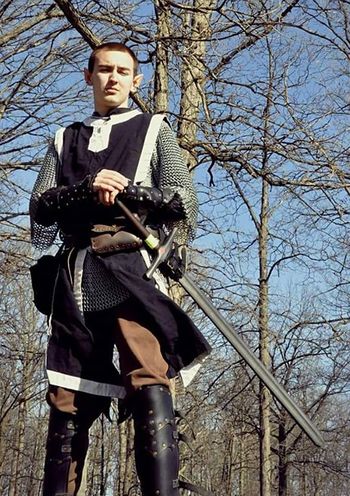 High Elves can be found scattered across the continent, with human kingdoms like Duvain, Berphaunt, and Tiefanue claiming that 5-10% of their populations are High Elven. However, the largest concentration remains on Day’ten island, which serves as the de facto capital of High Elven civilization following Suvant’s destruction.
Day’ten is a semi-tropical island with a population of approximately 3,000 High Elves spread across several specialized settlements. Tourquet serves as the major port and de facto capital, featuring the remnants of the massive pulley systems that once connected to the floating city above. Bein Gaer is a fishing village of twenty families across the river from Tourquet, while Oberne functions as a farming town in the northeastern hills. The coastal settlements include Lond (a fishing village on the north coast), Duron (a west coast fishing village known for pearl diving), and Laval (a shrimp fishing village near mangrove swamps).
The island’s economy centers on fishing operations that take advantage of nutrient-rich river mouth waters, agriculture, and the production of prized Day’ten coffee beans, which are sought after by merchants continent-wide. These coffee beans have become one of the High Elves’ most valuable trade goods, helping sustain their communities economically in the post-Suvant era.
A few small High Elven villages are found on the mainland, particularly in areas bordering the Grey Elven woods. High Elves enjoy the comforts of civilization but prefer settings surrounded by and interwoven with nature, especially forests. As such, they tend to be less represented in major human cities and the underground abodes of other races.
Culture
Social Values and Lifestyle
As a product of being a long-lived race, High Elven culture changes quite slowly. Viewing themselves as one of the most civilized races on the continent, High Elves pride themselves on apparel and accommodations that immediately communicate their social status and wealth. It would not be out of place for even middle-to-lower-class High Elves to own tailored, embroidered formal wear for guests or formal occasions.
High Elves also pride themselves on their ability to live in harmony with nature. Unlike Wild Elves, who revere nature as a maternal god-force, High Elves admire the beauty of nature, considering it an unrivaled aesthetic that is emulated frequently in their statues, poems, clothing, and even their tools of war.
Social Mobility and Meritocracy
Unlike other races with rigid noble hierarchies, a High Elf’s path is not set in stone from birth. Although proper respect and acknowledgment of rank and social standing is paramount, High Elven society has historically emphasized merit over birth. Talented young High Elves often find themselves adopted into prominent families, with particular emphasis on artisans and craftsfolk. Those who choose to remain independent still enjoy elevated status for themselves and their families.
Magical Education and Tradition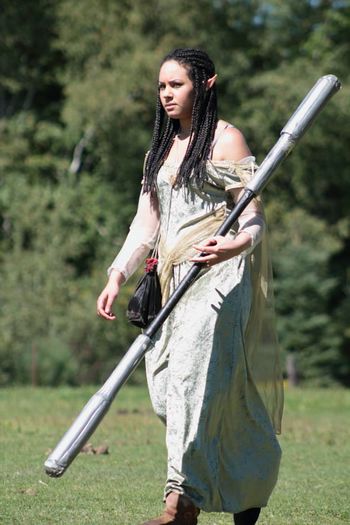
The pursuit of magical knowledge is widely sought after among High Elves, and their magi are considered some of the best in the world, rivaling even Berphaunt’s Mage’s Guild, the Conclave. Many High Elves claim that magic is their birthright, and the systematic policy of universal magical education reflects the belief that magical knowledge should be accessible to all High Elves regardless of social standing.
High Elves are renowned for their bladesingers – elite warriors who weave magic and swordplay into a deadly art form resembling an elaborate dance. These master combatants use spellwork to enhance their blade techniques, with enchanted weapons becoming extensions of their magical will. The title of Bladesinger is earned only through exceptional service and skill, marking those who have achieved legendary status as protectors of their people.
Religion and Spirituality
The majority of religious High Elves follow the path of Ll’yandra. Most High Elves strive to maintain good relations with other elven races, even Dark Elves and Ice Elves, when possible. Following the path of dragons, especially the ocean dragon Physignathus, is also somewhat popular, particularly among coastal communities.
Customs and Traditions
 Marriage
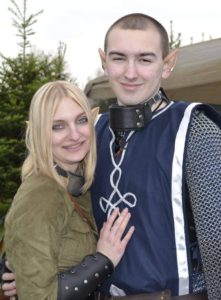
High Elven marriages are grand affairs, consisting of intricately planned celebrations by the two families. Food, music and festivities are all of the highest quality. High Elven grooms traditionally present their brides with wedding bands featuring emeralds, symbolizing the Green Shard that resides within all Thalan souls. In more prosperous communities, grooms may also present emerald green sashes or silken gloves. A Priest of Ll’yandra often performs the service, though depending on the couple’s beliefs, Dragon Knights or speakers of Physignathus may also sanctify unions.
Funeral Rites
Upon the death of a High Elf, the immediate family and friends prepare a special dual coffin. The inner coffin is made from handcrafted oak, with a larger stone coffin to encase it. The body is clothed in fineries with a screen of white lace or silk rather than being burned. The wooden coffin symbolizes their return to nature and Ll’yandra’s garden, while the stone coffin protects the corpse from potential necromancy by keeping the body sealed within heavy rock casing. A Priest of Ll’yandra says words hoping the High Elf’s Green Shard will return safely to the Mother. The body is then lowered into the twin coffins and into the earth.
Threats and Legends
 The Mortigeist
As every elf once knew, the eve of Hallows brought forth the devilish creature known as the Mortigeist. Said to be Ll’yandra’s first sentient creation, the Mortigeist’s envy and hatred of Thalan races knew no bounds. The creature dwelled within the corner of Hell called the Mizzer’baugh and once ruled all the terrors residing there, released annually to satisfy its need for Thalan flesh.
However, the ancient terror met its end when Thallan Ebonwalker, a favored servant of Ll’yandra, chose to free elvenkind from this eternal threat. Using the Mortigeist’s own corrupted spear Darkshard, Thallan killed the chained and defenseless fallen angel, ending the creature’s reign of terror over the elven races forever. High Elves, along with all elvenkind, no longer need to fear the creature’s annual hunts, though the memory of its terror remains deeply embedded in elven culture and legend.
 The Legend of the Three Tears
Legend states the Goddess and Mother of the Elves has but three tears to shed:
The First Tear was shed out of joy when she gave birth to the Thalan, her only mortal children. When it fell and shattered, the pieces became the Green Shards that give elves their eternal life. Each elf carries within them hidden memories of past lives, and the Shard continues until it returns to Ll’yandra’s Garden. When all Shards have traveled their paths, the time of elves will end. This is why necromancy is abhorred – it traps the Shard in an unliving form, removing it from the cycle.
The Second Tear was shed out of sorrow the day Ll’yandra’s city fell to mortal realm. This refers to the fall of the Grey Elven city of Tse Maigrindof, burned in the brutal human uprising that led to the Grey Elven race splitting into the factions that became High Elves, Wild Elves, Stone Elves, Ice Elves, Dark Elves and Shadow Elves.
The Third Tear has yet to fall. It is foretold that it will fall in the time of greatest need, shed out of hope that is lost.
Politics and Governance
 Traditional Governance
Most High Elven communities maintain informal government and judicial systems, usually led by small councils headed by elders. Many villages don’t bother with codified laws or professional law enforcement. Actions commonly worthy of trial include murder, theft, assault, slavery, necromancy, witchcraft, summoning, and magical coercion. Necromancy in particular is viewed as the action of an animal rather than a civilized elf, with those found guilty often ostracized from their communities.
This laissez-faire approach to laws and politics reflects the High Elven preference for self-governance through wisdom and social pressure rather than formal authority structures.
Modern Challenges
Following Suvant’s destruction, High Elven political organization has become more pragmatic and survival-focused. Day’ten now serves as the primary center of High Elven political organization, with Captain Joest’s military administration providing stability during the ongoing rebuilding period. The complex noble house system that once dominated High Elven politics has given way to more immediate concerns of reconstruction and cultural preservation.
The loss of Suvant’s advanced magical infrastructure has forced High Elven communities to adapt their renowned educational systems. While the commitment to universal magical education remains strong, the sophisticated academies and libraries that once made Suvant unique are gone. Day’ten’s universities now emphasize field study over the text-based curriculum that characterized Suvantian institutions, reflecting both practical necessity and the loss of countless magical texts in the floating city’s destruction.
High Elven society has also had to grapple with the psychological impact of losing their greatest achievement. Many survivors struggle with the transition from the elevated comfort and security of the floating city to the more grounded reality of island life. The pulley systems that once connected Day’ten to Suvant now stand as monuments to what was lost, though some of the mechanical expertise gained from their construction has been repurposed for improved port facilities and inter-island transportation.
Current Status
Following the destruction of Suvant in 2261, High Elves have entered a new chapter of their long history. No longer unified under a single great kingdom, they have adapted to a more distributed existence while maintaining their cultural identity and magical traditions. Day’ten serves as their primary stronghold, but High Elven communities can be found throughout the continent, each preserving the wisdom and artistry that has defined their people for millennia.
The loss of Suvant was devastating, but it has not broken the High Elven spirit. If anything, the tragedy has reminded them of the resilience that first drew them to admire humanity, and they face the future with characteristic determination to rebuild something worthy of their ancestors’ legacy.
Views on Other Races
 High Elves treat other Thalan with initial kindness, regardless of their walks of life. All elven subraces come from the Grey Elven blood that started everything and deserve respect. Their views on other races usually center around that race’s overall intellect and advances in civilization.
Ajaunti: “We remember when their magic pained them. Good that they are now free to explore its intricacies.”
Avians: “Almost an intellectual equal – if they could only stray away from the Shadow Plane.”
Draconians: “Wise and ancient beings.”
Einher: “Barbaric and superstitious. It is a wonder that they have survived on strength alone. Perhaps such tenacity should not be overlooked.”
Gargylen: “Regard carefully the immortal constructs. At what cost do they experience the rest of eternity?”
Gnomes: “Curious and intelligent, but irresponsible.”
Hoblings: “A playfully young creature, and yet gifted with some form of long life. They may yet advance.”
Humans: “An often tragic waste of potential. Were the young only blessed with longevity.”
Mountain Dwarves: “Gruff and lacking in the social graces… but admittedly decent craftsmen.”
Orcs: “As with all Goblinoid: dull-witted cretins with a knack for war. Disgraceful.”
Savar: “A matriarchy is an interesting political structure.”
Sidhe: “Their magical prowess and knowledge bear the weight of millennia. They have earned respect.”
Wood Fae: “Frivolity can only last so long without wisdom, but their magical nature is welcome.”
Roleplaying Tips
- Try to specialize and pursue excellence in whatever you do – High Elves expect themselves to be the very best and will not settle for second place
- Embrace the influence of magic when you can
- Learn when the opportunity is afforded
- Admire beauty and attempt to bring more of it into your surroundings
- Live in a way that is at peace with nature
- Provide your wisdom and opinions to those less fortunate and less gifted races, whether they ask for it or not
- Understand the ‘hierarchy’ of races (from top to bottom): High Elves, Other elves, Fae/Avians/Humans, Dwarves and Gnomes, Greenskins and whatever is left