

Fire Elves
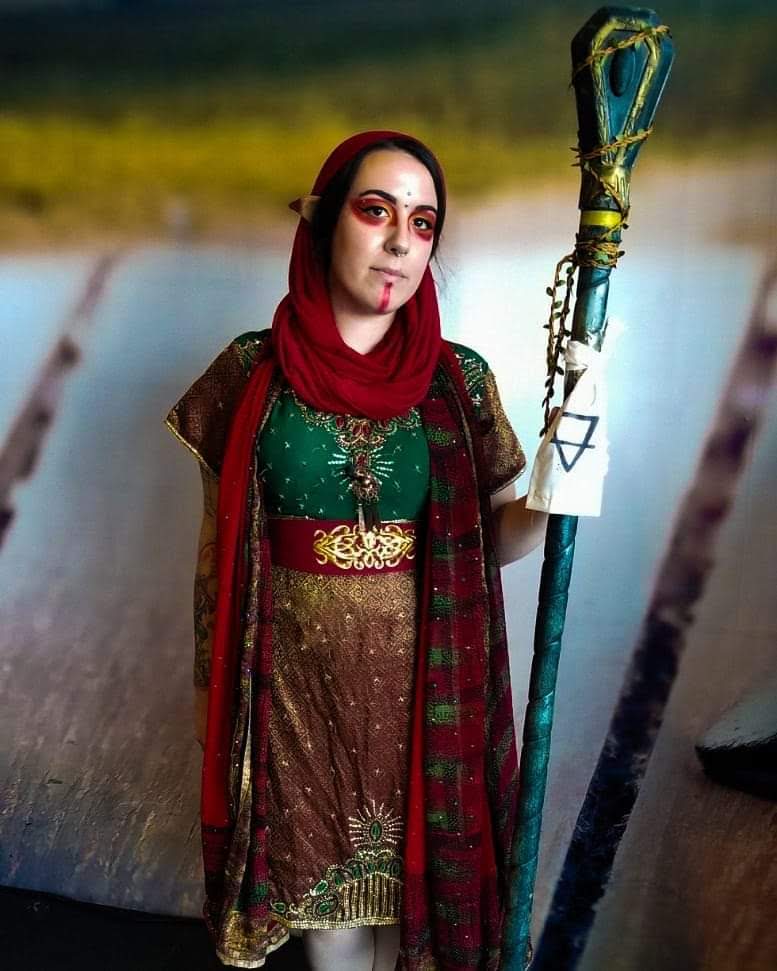
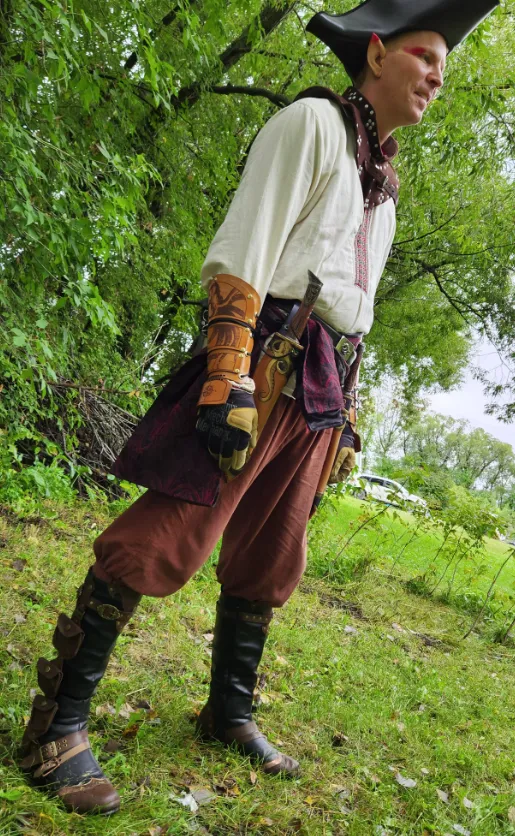
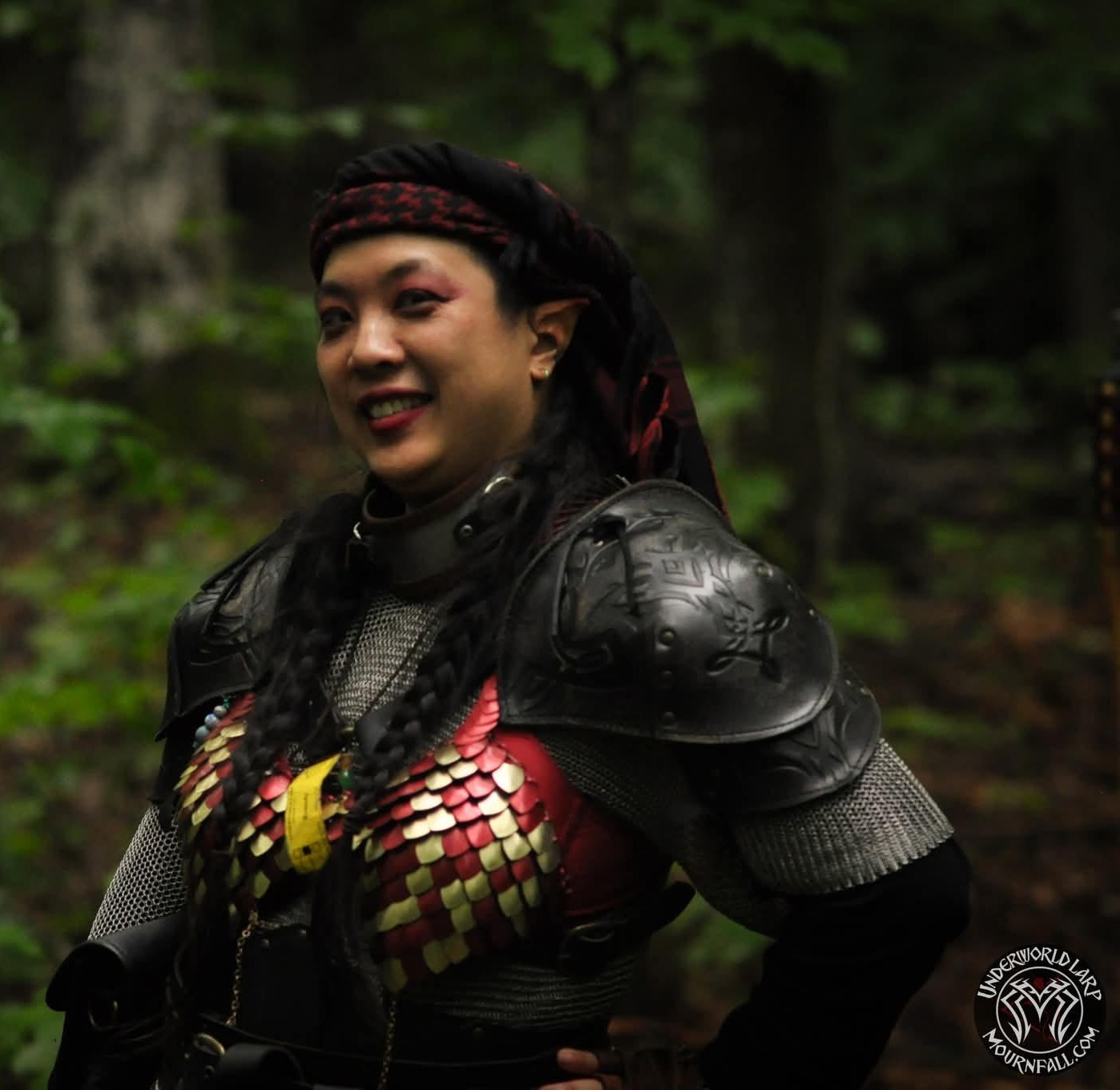
The Fire Elves, or the Cindus’Thalan as they are more formally known, are a race of largely desert-dwelling elves known for their near-supernatural endurance and uncompromising nature. Forged by the harsh desert sun of the Rashadan nation, these taciturn elves wander the dunes of their desolate homeland, chasing the water whose pursuit forms the most fundamental aspects of their culture.
Language: Arabic
Life Expectancy: 700 – 1000 years
| Child | 1 – 15 |
| Teenager | 16 – 20 |
| Young Adult | 21 – 50 |
| Mature | 51 – 100 |
| Middle Age | 101 – 399 |
| Old | 400 + |
Contents
History
 Before the Elves there was only the Thalan. Two such Thalan, twin sisters named Prya and Hanna, fancied themselves adventurers. Although they were twins in appearance, they were nothing alike. Prya was rash, quick to anger and impatient. Hanna on the other hand, was calm, methodical and disciplined. Despite their differences they still got along well enough in a land where the Thalan walked as kings and queens.
They journeyed to the many continents of Arthos, and across its many seas. One such adventure, which was sadly their last, brought them to a lush water-filled jungle, deep within the heart of an ancient continent whose name was unknown at that time. As they travelled unhindered by nature, they spied a dark, damp cave leading to the unknown. Cautiously they crept down into the depths, because sometimes even the Grey Elves were guilty of being fools. As they reached the bottom of this abyss, they witnessed something both terrifying and incredible. The tunnel opened into a massive cave, with treasure beyond counting covering the earth floor like a golden blanket. In the centre, larger than anything they had seen before, lay a giant sand-coloured worm. Its scaled skin was thick, and shone like glass. It had no eyes, just massive row after row of teeth visible behind the small gaps in its trifurcated maw. It did not stir or move, and after some time the sisters realized it must be asleep. They crept as carefully and as quietly as they could towards the beast, fearful that they might awaken it. As they walked around the head of the giant worm they spied a treasure beyond wealth. A single magical flame that burned brighter than a thousand torches. It simply floated there, radiating heat and magic the likes of which they had never felt before. The sisters knew that they had to steal it.
Perhaps they might have turned back and thought better of things, had they truly known just what manner of cave they had entered. For this was the subterranean lair of the Firstborn Khut, the Sleeper Beneath the Sands. So fearsome was his power that all those who called these lands home knew to leave the old man to his solitude. But alas, being the ignorant fools that they were, the sisters proceeded anyway. Moving slowly, they both made their way towards the fire, but Prya was the first to reach it. She grasped the flame and pulled it close to her, craving its warmth and power more than anything she had ever desired before in her long and storied life. Her theft did not go unnoticed though, and the worm began to stir as he felt the heat of his most treasured prize be taken from him. Once he realized what had happened, the great Dragon Khut bellowed in rage, promising pain and suffering unending upon the sisters for their transgression. The sisters, now frightened, turned to run as Prya took the flame and placed it inside her chest. There was nowhere to go however, for Khut was the master of his domain and would not permit them to leave. Once he had them pinned against a small corner, his great maw distended wide as he rapidly inhaled the great mass of sand upon which he had once rested. The sisters shook with a terrible fear, expecting this to be their end. With a mighty roar that shook the very foundations of Arthos, the Firstborn released his Breath Weapon. A torrential blast of sand, more powerful than any sandstorm, spewed forth from his mouth with terrifying force and blinding speed. The treasure around the sisters disintegrated within seconds from the abrasive force of the sand that scoured it. Prya raised her hands up in horror in a futile attempt to turn that sublime force aside, but as she did so she felt the power of the Flame Eternal that lay within her chest. In an act of pure instinct, she reached within and called it forth. When Khut’s rage had been expended and the sands had settled, he looked down upon what he expected to be the dust left behind by the thieves’ corpses. Instead, all he saw was a thick wall of glass between him and his prey. The Flame Eternal had melted the sand that rightly should have annihilated them, and instead turned it into a protective glass shield. The sisters turned and ran as Khut roared in anger and confusion, taking the opportunity it afforded them to slip past the scaled worm. When they reached the entrance of the cave, amongst the lush thick trees, the two sisters hid themselves using their Thalan abilities, and returned back to their nearby camp.
That night things took a sour turn for Prya. She had used the power of the Flame Eternal and it saved them, but such raw power has a cost that must always be paid. Her ivory skin began to dry, shrivel, and crack. Her lips broke out in blisters, and her once beautiful voice became dry and raspy. The power of the flame was consuming her in turn. She ran then, as fast as she could, to a nearby lake seeking relief from the terrible power she had wielded in ignorance. She drank from that lake, and as her sister Hanna watched in horror, she drained it dry. An entire lake, with water enough for an entire ecosystem, was gone in mere minutes. Her body then began to hydrate and within moments, she was whole once again.
Such power, once wielded, is rarely ever set aside again. Despite the consequences of wielding it, Prya could not help herself. She used it constantly, and nearly always for power and personal gain. Its power was not unlike that of the taste of Ambrosia upon the tongue, and only woe or death came to those who stood in her way. The jungle, once a fertile and lush place, fell to Prya’s thirst with more and more of it becoming a desert each time she called upon the flames. Her sister Hanna could not abide Prya’s selfish crimes, and resolved to stop her reign of terror. Bringing as many other Grey Elves as she could muster, Hanna brought battle to her sister so that she might save her from the flame’s influence. Though their lore and arcane might were great, Prya proved to all of her kind that the Flame Eternal was greater still. All present fell to her flames, though Prya had to reduce the entire jungle to a desert to do so. Desperate for any moisture as the power she had unleashed threatened to consume her, Prya now half-mad, lifted up the person that was once her beloved sister, and attempted to harvest her water. With the last of her strength, Hanna whispered a spell that projected the last of her water directly into the Flame Eternal that lay within Prya’s chest. The resulting reaction of two opposite forces meeting caused a massive arcane explosion, hurling them into the sky and straight through the Celestial Canopy. Even to this day, their burning light can be seen as the objects we call the sun and the moon.
The Flame Eternal itself was shattered under the strain of this cataclysmic event, and split into the thousands of shards that fell down back upon the earth. Those that met with Grey Elven spirits wrought a more stable, less severe form of the changes Prya had experienced, while also losing many of the gifts of being amongst the true Thalan. Over time they took the name of Cindus’Thalan for themselves, and adapted to the harsh landscape that Prya’s ignorance and lust for power had wrought.
Geography
 The desert sands of Rashada are likely the most deadly and inhospitable lands that still host mortal life on perhaps all of Arthos. Most of the continent upon which it lays, known to many as Prima, has been claimed by a perfidious strain of humanity that calls itself the Pax Mordibish. These human purists claim to have slain both God and Dragon alike, and nurse a powerful, burning hatred for all things magic. From their empire of Prima Core they seek to wipe all magic off of Arthos, and woe to those who might stand in their way.
Resting upon the north-eastern corner of the continent, Rashada is the only piece of that land that remains free from their iron grip. Ringed entirely by vast jagged mountains that almost completely encircle its coastline, the only way in or out is through the aptly-named Shifting Sands Desert that abuts their peninsular border or by Skein Gate. Travel through these dunes is akin to a death sentence for those not adequately prepared. Khut’s rage empowers the sandstorms that wrack these lands to this very day, and show no signs of abating. The winds can scour flesh from bone when they are at their fiercest, and even when they abate to the point where they are merely just painful, most cannot see a few inches beyond their face at any rate. Even the sands beneath one’s feet betray any attempt to map safe passage, with most routes lasting but a day or two before shifting once more. It is said by the Cindus’Thalan that only their ancestors can truly guide one through this ever-present storm, but the means by which they are reached and their aid secured are kept as very close secrets by a chosen few. As such, their enemies have yet to conquer these harsh dunes. The strange devices the Pax rely upon simply do not function in Khut’s storm, and their repeated attempts to overcome his power have always met in abject failure.
Beyond the Shield Wall Canyon that separates the Shifting Sands from Rashada proper, lies the blasted earth where the Fire Elves wander as nomads. Bound together in tribal groups called “knots,” each and every Fire Elf is shaped by the harsh, dry, and deadly desert landscape that they call home. Oases are few and guarded by the knots with the might to preserve them, with most of the water given over to the production of hardy crops. There is never enough water to go around, and as such most Fire Elves do not have the luxury of settling down for any length of time. Instead, most are forced to follow the few rainstorms that occur, gathering what they can and remaining ready to make the most of the next downpour. The landscape itself bears witness to the utter lack of moisture here. The only flora or fauna able to survive in these conditions must be capable of storing large amounts of water for significant lengths of time, as it can be years between rainstorms if a creature or plant happens to be particularly unlucky. Shelter from the hot sun is rarely provided by nature, as most trees cannot exist here. Caves and rocky outcroppings are used to protect the Fire Elves from the worst of the sun’s heat as they wander, and protection from the desert’s many predators should they happen to garner their attention.
Rashada’s brutal landscape is but a single factor in the mélange that makes life there so utterly uncompromising and lethal. Every living creature is a predator shaped by a crucible of suffering and pain; the soft plant-eating animals of the wetlands would not survive in such a place for longer than a single day. Spiders the size of small dogs dig into the sands and cover themselves, emerging only to strike and drag their unfortunate meal into the depths. Large, imposing eagle-like birds called Rocs can strike from the sky seemingly out of nowhere, and are capable of carrying off fully grown adults if they are hungry enough. The worst of the lot are the Sandsharks, heralded by their sand-toned fin that carves through the desert landscape. These powerful magical creatures are drawn to the scent of spilled blood. They can track it even long after it has soaked into the sands, and descend upon it like flies to rotting meat. Their skin is like iron, their mouths wide and filled with hundreds of razor sharp and diamond-hard crystalline fangs, and they do not feel pain. While they can be slain, such a grim task will inevitably attract their larger, more worm-like cousins known as the Get of Khut. These massive, sand-dwelling worms are akin to the drakes that serve the other Firstborn, as Khut has no traditional drakes of his own. It is said that they can swallow an entire Fire Elven knot whole, and are nearly impervious to physical injury. As such, the Fire Elves tend to avoid battle upon the sands when they can help it, instead preferring to fight upon the rocky mesas where they Sandsharks and the Get cannot travel.
Thousands of years ago the first Fire Elf city was created, a wondrous metropolis shaped entirely out of glass. Shayradoom was its name, and it was said to be the most beautiful city in all of existence. In those days, life amongst the Cindus’Thalan was nothing like the brutal existence it is now. All who lived there did so in peace and prosperity. There was never a lack of water, and even the poorest could drink themselves to bursting from wondrously-enchanted public fountains. Trees lined the wide boulevards, laden heavy with ripened fruits just begging to be picked. Expertly-made Golems performed all the manual labour the city required, leaving its citizens to pursue anything they fancied. Some became prominent artists, while others delved into philosophy and became the greatest thinkers of their age. Truly, it was a heaven on Arthos; a utopia. Then came the Pax Mordibish. Surging from the southern heart of the continent they shared with the Cindus’Thalan, their arcane-hunting armies had begun their crusade in earnest. The Cindus’Thalan attempted to resist, but their magic was worthless against their foe. In fact, most had never even seen a sword, let alone wielded one. The Pax thus defeated the Fire Elves rather easily, but that did not spell the end for Shayradoom. Seeking to save something from their golden age before it all fell to ignorance and ruin, the elder mages of Shayradoom gathered and cast one of the most potent rituals ever devised by mortal minds. One night it was there, and the next day, it was not, and none could say where or whence it had gone. Those who had not been in the city at the time were left behind, but were able to flee the battalions of the Pax in the resulting confusion. Their ancestors spoke to them in dreams, leading them north across sand and storm to the land they now call Rashada. Legends told around the night-fires still claim that Shayradoom is still out there, somewhere amongst the sands. Both elder and youngling alike claim that there is a kernel of truth to these ancient tales, with a few stories even speaking of a fragmented map that could lead one right to its very doorstep, should it be reassembled. This rumour alone has launched the careers of a thousand adventurers, but as of yet even the lucky ones have yet to find where their once-utopian city now rests.
In the modern age, there is but one permanent settlement that is worthy of being called a city in all of Rashada. Although Shayradoom is now gone, those who remained raised up the great city of Kahvesi in its place. As this is the site of the only Skein Gate upon Rashada, most international trade and travel is forced to run through Kahvesi, and as such its rulers have profited greatly from their stranglehold upon this vital lifeline. For those precious few in the inner city, life is truly paradisiacal. These titans amongst their kind enjoy all the water they could ever wish to drink, and more precious gifts besides. It is said that they even enjoy the life-giving waters of the fountain of youth itself, so that they remain forever young and immortal for as long as they wish. Those poor sods forced into the outer city are far vaster in number, and are little more than chattel. Forced into cramped living quarters and only given the bare minimum to survive, these folk are responsible for all of the backbreaking labour that makes the luxury of those who live in the inner city possible. Occasionally one amongst their teeming hordes is taken into the inner city, thus perpetuating the hope that they too, may escape this toil and finally experience a taste of the good life. Most even know that this is an entirely cynical move meant to give them just enough hope to continue their work without complaint, but they are in turn so beaten down by their broken, exploitative culture that they accept it anyway. For there is simply no alternative for most Fire Elves. To be cast out in the desert alone, is to die.
Culture

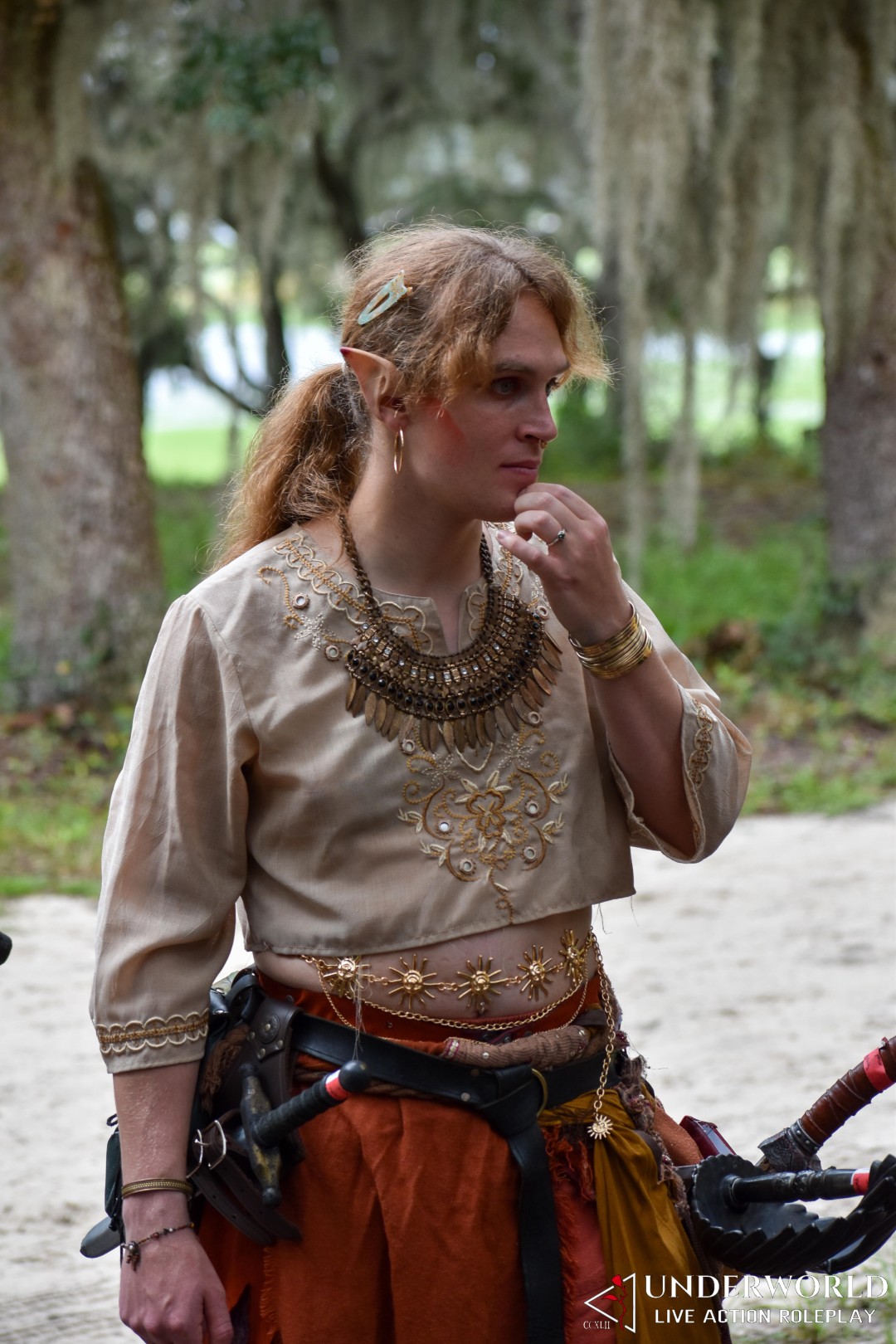 The Fire Elves are a people almost completely defined by hardship. Theirs is a society almost as cruel and unforgiving as the harsh desert sands that they call home, and those afflicted with weakness or a soft heart will inevitably quench the thirst of hardier folk. They are a people that live a simple existence that is not unlike the other races of Arthos, save that they do so in a sun-blasted landscape that is doing its best to actively kill them. Outside of the gilded beauty of Kahvesi, the more nomadic Fire Elves have little artistic pursuits. Such things are for the soft folk of the Wetlands; the indolent and soft denizens of these places who can afford to waste time on such pointless endeavours. What songs they have to pass down and what legends they tell are meant to inform and teach. Orations with the singular purpose to entertain are instead seen as pointless at best, and a vile sin at worst.
In the rare months where the ancestors are generous and water is somewhat plentiful for a time, the Fire Elves rarely use this opportunity to relax or rest upon their laurels. Instead, they turn their gaze to the southwest, to the manufactured and conquered lands of Prima Core, and the foul Pax Mordibish that populate it. The Cindus’Thalan have sworn a pact of bitter hatred and never-ending vengeance upon them, and in circumstances where their needs are met they often turn their singular focus towards killing as many of them as possible. Some war-leaders of the conflicts with the Pax are some of the few Fire Elves widely respected amongst all the knots, to the point where they are perhaps the only class of Fire Elves who can be greeted as family by the folk that should be their bitter enemies.
Religion and Superstition
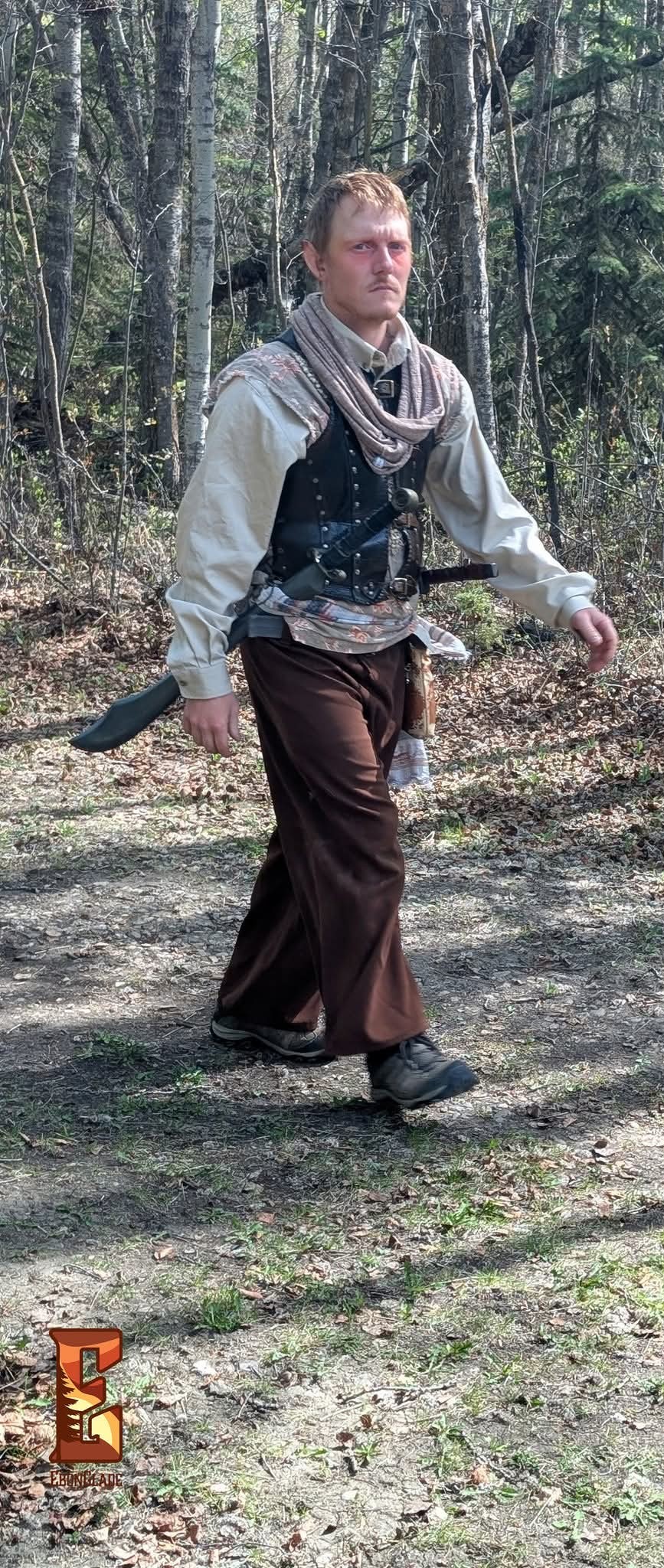 Religion, be it the worship of the Divine or the reverence of the Firstborn, is so uncommon amongst the Fire Elves that it borders on non-existence. The exact nature of this feeling towards the higher powers of Arthos does vary slightly, with some Fire Elves simply believing that these beings are unworthy of worship and go about their lives, while others actively hate them with a passion and seek to work against them. Why should they, a people who can survive and even thrive in the harshest environment known to mortals, cry out to the Gods for salvation? Why should they tithe their time and their faith, when the powers-that-be truly have nothing they need? Where were the Gods when the Pax Mordibish slaughtered their ancestors and ended the golden age of Shayradoom? Where were the Dragons when the land itself died? Why should they, a proud, noble, and strong people, bow and scrape as they wail towards the heavens like a Wetlander?
In the minds of the Fire Elves, the Gods and Firstborn have done nothing for them; not now, not ever. By their own strength and will alone they survive in the harshest environment on all of Arthos. Should any need evidence that they do not need the so-called higher powers to feel fulfilled and alive, their history is living proof of that inalienable fact. However, any rule must always have its exceptions. Not many, but a precious few, do overcome this massive block on worship that their culture has created, and find themselves in the service of a higher power. Called “faith-slaves” derisively by their more misotheistic kin, these sorts of folk are very rarely tolerated on Rashada proper. Some are killed, but most are exiled from the sands and given brands that mark them for death should they ever attempt to return. Most will die in the wastes or be claimed by the Pax, but a few do make it to a Skein Gate or a boat, where they might find more tolerant lands in which to settle.
In the absence of a religious belief system similar to those practiced by mortals who live upon Maud’madir, the Cindus’Thalan have not simply ignored their need for spiritual fulfilment, or the reality of what happens to your spirit should you perish. Like the Ajaunti, the Fire Elves revere their ancestors. However, unlike the Ajaunti, they do not look upon the spirits of their fallen kin as a large, extended family that watches over them from across the veil. For not every dead Fire Elf is worthy of becoming an ancestor, and few ever become one. Only those who gathered enough water in life are propelled above the Black Desert and into the Celestial Canopy above to shine as a guiding star, while those who fell short are doomed to wander the endless shadowy dunes of the Deadlands forevermore. These figures, having done enough to conquer the cosmic odds stacked against them, take on an almost saint-like quality and are often called upon to intercede in mortal affairs. The Fire Elves believe that it is their ancestors that pour the rains through the holes in the sky when they are pleased, and that with offerings of water and salt even more may be granted.
In the absence of a hierarchy of tenets and sins, the Fire Elves have acquired an assorted collection of superstitions and odd beliefs that fill the gaps of their spiritual life. While these do occasionally vary from knot-to-knot, there are still certain beliefs that are widely known across Rashada.
- Never drink the last drop of water in your skin. For it belongs to the ancestors, and they grant more water if respected.
- If a campfire won’t light, it means the land beneath is cursed. Move your camp at once.
- Breaking bread without sharing it will turn the loaf to dust in your mouth.
- A child born during a sandstorm is said to have the storm’s spirit within them, and it is both a blessing and a curse.
- If your shadow disappears in a mirage, it means your spirit is being watched by a malevolent force.
Marriage & Mating
Relationships amongst the Cindus’Thalan are a complicated matter. When death is around every corner, many of their kind are not willing to let themselves be vulnerable or open up to someone who may very well be dead a week from now. Furthermore, traditional Fire Elven culture does not encourage one to be emotionally open or friendly with most folk. As such, most relationships between Fire Elves tend not to be based on love, but rather upon simple physical attraction, or the need to secure an alliance between two otherwise unrelated knots. The most powerful warlords of Rashada owe a great deal of their might and influence to these vast networks of political marriages between the desert clans.
While the Fire Elves hold few prohibitions regarding matters such as sexual attraction or gender roles, children are a different matter entirely. Each new child is not only a new mouth to feed, but is also a burden upon its parents who now cannot devote all of their efforts towards the survival of their knot. A single child can make the difference between a knot surviving a dry age, or dying a brutal death under Rashada’s sun. As such, reproduction is tightly controlled by the leader of the knot. A couple may only give birth with their express permission, to violate this precept means death for all those involved.
Water Discipline
Water is everything to the Cindus’Thalan, so much so that in their most ancient tongue the word for water, life, and riches are one and the same. Water occupies such a reverent place in their culture, that to ask a Fire Elf for water is extremely insulting, and is akin to simply asking them for their very life instead. Offering water to another is then, quite obviously, a sign of the greatest respect. Should a Fire Elf spit upon the feet of another person, a wise person would do well to avoid taking offense, and instead treat the gesture as the mark of abiding respect that it represents. To quite literally give one “your water” is one of the grandest signs of appreciation and approval a Fire Elf can display.
Mortals need so much water to survive, be it for themselves, their livestock, or their crops, and in Rashada there is never enough to go around. Not only do they merely need it to live, but acquiring even more than what you need is believed to be the only thing that can propel one’s spirit after death through the Celestial Canopy above, where they may take their place as an honoured ancestor. Thus, nearly everything the Fire Elves do, from making war to chasing omens that promise to predict the next rainstorm, is done for the acquisition of water. Even their own waste is recycled through alchemical and magical processes known only to them to produce more usable water. Nothing is wasted, not even the corpses of their foes. These are drained of as much of their moisture as is possible, with the resulting bounty going to their slayer. Known as “Red Water,” this moisture holds a special kind of reverence in Fire Elven society, for it is what grants life itself. It is of course filtered before it is used, but the process has an almost reverent or religious quality about it, and is as much ceremony as it is science.
Curiously, for reasons unknown to the Fire Elves, water from other continents cannot cross into Rashada through the Skein Gate. Most Cindus’Thalan blame this unfortunate fact upon a curse they claim was laid upon them by Khut ages ago, while others point to the Pax and how they meddle in all things arcane. Whatever the answer might truly be, any water that travels through the Skein Gate will simply evaporate in an instant the moment the Rashadan air touches its surface. This even affects water held closed in any form of container, be it mundane or magical, with the liquid lasting only for a few seconds.
Water discipline is absolute, ending only in death. Such is its importance that even a Fire Elf that has left the desert will still place containers outside their tent to catch the rainwater. When questioned on why they still continue this practice despite water being abundant, most will admit that such behaviours are ingrained into the very fibre of their being. Not doing so simply feels wrong, regardless of whether it is logical or even necessary. The act of failing to gather water, or the lack of discipline in its use, is akin to some of the greatest sins proscribed by the churches of Maud’madir. The funerary rites of the Cindus’Thalan are the only time when water is essentially wasted in the eyes of an outsider. When a Fire Elf finally meets their end, the water they have managed to gather in life is poured into a massive copper urn along with their corpse. The urn must be kept stoked and boiling until all of the water boils away, and the body has been destroyed. It is believed that this boiled water is what propels one’s spirit into the sky and through the Celestial Canopy. Thus, the greater the hoard of water offered to the urn, the higher and brighter the essence of the individual is said to soar beyond the Celestial Canopy.
Politics and Governance
The current Grand Shah of Kahvesi is Yaaj Berul of the Hidden Step, Potentate Under the Canopy Above, Sorcerer-King Before the Sandstorm. He claims to be the supreme authority of the Cindus’Thalan, and that each and every single last Fire Elf owes him their abject fealty, for he is their absolute ruler. He proudly asserts that only he may speak for Rashada in all matters with foreign powers, and is often the only Fire Elf of note that the monarchs of Arthos have any dealings with. The truth of the matter is a bit more complicated. While it is true that the Grand Shah holds a great deal of power and a large portion of Rashada’s wealth, his control only extends a few miles beyond the farms that lay outside Kahvesi’s walls. To assist in this, a group of twenty anonymous advisors known as the Crimson Court, attend him. Each is always seen in obscuring claret robes dyed by Red Water and adorned with a singular golden mask to fully hide their identities. While the Grand Shah deals with Kahvesi’s more outward shows of power and opulence, the Crimson Court decide who are let into its beauty. Many Fire Elves within the city and without have speculation on who various members of the court are, and if they are elder representatives of long-gone knots or even mysterious extraplanar creatures. However, none but perhaps the Grand Shah knows the truth, as their identities remain obscured even in death. All know, however, that a life of splendour and comfort lives and dies by their quill strokes.
Beyond Kahvesi’s fortifications lies the domains of a thousand warlords, each with their own subjects, allies, and spheres of influence. Truly, apart from the small civil service that sees to the maintenance of Kahvesi and the enigmatic Crimson Court, Rashada itself lacks any real forms of government or administration common in other lands. Roads, taxes, welfare, even military service vary in both quantity and quality, and are always subject to the whims of the warlord that happens to control that particular area.
When the Cindus’Thalan speak of their extended tribal units, they use a word that roughly translates into the word “knot” in the Common tongue. In their own dialects it is a term laden with layers of meaning, but essentially refers to a group so tightly bound together by kinship that they cannot be undone. These tend to be small yet numerous, and loyalty to their chieftain, leader, or elder becomes ever more uncertain the farther their blood-ties lie from them. Those few worthy of being called warlords are often politically savvy individuals that have managed to bind a collection of knots to their will by a carefully orchestrated web of unions and sworn oaths.Most commonly a knot is a group of Fire Elves bound by blood or marriage, with the former making up most of a knot and the latter being used to cement alliances between different knots. Like many of the other peoples of Arthos, might is the sole factor that decides who rules. However, there is an implicit contract between the leader and their knot, and one who cannot lead them to water, and thus ensure that they survive, will not rule for long.
The Knots
These are but some of the various Fire Elven Knots found throughout Arthos, and these do not represent the fullest extent of their cultures.
The White Sands
Known as the Rimal Bayda in their original tongue, this nomadic and matriarchal knot is known primarily for their annual pilgrimage to the sun-bleached white dunes that lay just beyond the Shifting Sands. This yearly ritual has a twofold purpose. Firstly, the most outlying settlements and border forts of the Pax Mordibish lay nearby, and raiding these places is an important coming of age trial for those of the Rimal Bayda that have reached adulthood. If they fight well and survive, they are marked with a tattoo across their face that marks their area of expertise, be it martial skill, alchemy, magic, and so on. Failure, be it via retreat or death and resurrection, means one is still a child and the trial must be re-attempted again next year.
These raids have a secondary purpose however; one more important that perhaps the young proving themselves to their elders. The white dunes themselves are not sand at all, and in fact are composed of the purest salt to ever grace the surface of Arthos. Its uses go beyond the culinary, and extend further into the realms of alchemy and even ritual magic. The Rimal Bayda gathers all that they can, retreat back beyond the Shifting Sands before Pax patrols can catch them. The salt is then traded far and wide for all that cannot produce it themselves. As such, the Rimal Bayda are widely known to those that make the perilous voyage to Rashada’s shores.
The Basalt Kingdom
Deep within the volcanic heartlands of the Umberfloe lies an ancient, smoking volcano that was once home to only a large and powerful clan of Vulcan Dwarves. Proud and haughty, they looked down upon the other races of the Umberfloe and made no effort to join their greater community or even trade with them, and in lean times they often suffered for their arrogance. After a particularly nasty famine nearly brought their once-great kingdom to its knees, it was clear to even the most stubborn clan elder that something had to change.The arrival of a large group of Cindus’Thalan traders upon their shores ended up being exactly the solution to their problems. The Fire Elves were also a proud, strong, and fierce people, well inured to the ravages of flame and heat. They were a people they could look upon as equals, a folk they could respect. Envoys were sent and entreaties were made, with the end result of the Fire Elves joining their Dwarven brethren as equal partners within the Basalt Kingdom. There, these Fire Elves became their link to the outside world, with most serving as either traders, diplomats, or in some cases, assassins.
The Blades of Twilight
This knot exists outside the messy, tangled web of favours, kin-bonds, and knot-feuds that is the traditional social structure of the Cindus’Thalan. They care little for the greater part of their people, or even themselves. Composed solely of those who have suffered a personal and grievous loss at the hands of the Pax Mordibish, this knot has completely and utterly committed itself to the uncompromising destruction of all who are marked with the silver and golden teardrop tattoos; the mark of a true Mordibish. They will make any sacrifice or commit any sin, so long as it leads to at least one of the Pax passing on into the hereafter. They are known to travel far and wide, chasing the agents of the Pax as they seek to further their machinations across Arthos, and cutting short the lives of those that would seek to join them.
The Drinkers
In Rashada, there are two kinds of Cindus’Thalan: those that accept the authority of the Grand Shah and are graced to live within the walls of Kahvesi, and those that do not. The latter often feel nothing but contempt for the former, seeing them as cowards and weaklings that could not endure the challenges posed by a life lived freely. As such, they refer to all city-dwellers by the slur of “drinker.” The implication being that their thirst rules them so utterly they are but slaves to it. Within Kahvesi’s walls they toil and labour away for those rich in water, and all for just enough moisture to continue their wretched existence. So utterly humiliating are their lives that the epithet of drinker has taken on a deeper meaning. Instead of merely referring just to those within Kahvesi’s opulence, it has taken on a connotation of being weak and undisciplined.
Common Personalities and Views
Widely known as a grim, taciturn, and merciless people, the Fire Elves are rarely friendly or warm, especially when amongst strangers. Even when they are amongst their own blood kin, they are especially harsh and uncompromising, with displays of affection reserved for only the most private and intimate moments. Anyone not related to a particular Fire Elf by blood is at the very least viewed as a possible enemy or an emergency source of water, and are often treated accordingly.
The Cindus’Thalan widely consider themselves to be the hardiest race of mortals to ever walk the surface of Arthos. Rashada and all its many dangers and trials have forged them into a people without equal, or so they believe. Most Fire Elves thus tend to have quite a high opinion of themselves, which is in turn reflected by the absolute disdain they feel for almost every other mortal. They are seen as weaker of wit and strength than even the lowliest Fire Elf, and are often treated with little more than derision as a consequence. For those that leave Rashada, these inherent biases ingrained into their personalities from a very young age can be overcome, with many Fire Elven adventurers coming to see these Wetlanders as valued allies, friends, or even family.
For most of the knots that wander Rashada, a great deal of their time and work must be spent securing what little water they can from their brutal homeland, lest they come up short and die as a result. For many of their kind this results in a powerful, yet singular burning drive that serves as a metaphorical tunnel. Should a Fire Elf leave Rashada for a land where water is plentiful and easily gathered, this impulse does not go away, but instead they may find that this ingrained obsession has been forced onto something else entirely. Some replace the pursuit of water with the acquisition of wealth or societal power, while others might seek to understand some new trade or purpose.
Views on Other Races
Humans: “As varied as the grains of sand under the sun, do not make the mistake of assuming one is like the other. One nation may be a good trading partner, while another may seek to rob us of what little riches we have left.”
The Pax Mordibish: “Once, we were great. Once we lived in harmony with all. Once, even the poorest amongst us could drink their fill in the City of Glass. Remember what they took from us as you slit their fucking throats.”
Fire Elves: “Me against my brother; my brother and I against our cousin; my brother, my cousin, and I against the world.”
True Fae: “They often promise water, or an escape from the harsh light of the sun. Their gifts are never worth it; deal with them at your own peril.”
Undead: “While the endless hunger of the intelligent dead is a grave threat to what little we have, the mindless dead are excellent labourers. They work ceaselessly without rest under the harshest sun, and our necromancers can accomplish much with only the meat our spirits leave behind.”
Draconians: “Avoid the Children of Khut. They have not forgiven Prya’s theft, and seek to slaughter us whenever they find us. Plus, their Red Water is foul and not safe to drink, even after purification. As for the scaled children of the other immortals, be wary.”
Orcs: “We have heard far-off tales of how these folk fell afoul of the games that the Pax play. Aid them if you can, and stoke their vengeance towards our mutual foe.”
Minotaur: “Strong, steadfast, and equitable trading partners. Watch for their ships that bear the sigil of Four-Horn, and profit.”
Ajaunti: “Weaklings and fools, these travellers are ill-prepared to face the trials of the sands. Share your water only if you stand to gain tenfold in exchange, otherwise leave them to die, and take the Red Water that remains.”
Wild Elves: “The elders say that the trading vessels of the Kraken Tribe saw many a knot through a dry season, and for that they have our thanks.”
Roleplaying Tips
One of the most important things to remember when playing a Fire Elf is the environment that shapes them. Even those born outside Rashada tend to grow up in harsh lands where survival is never a guarantee, and each day is a bitter struggle against the odds. They are almost always incredibly hard and tough, in both a physical and emotional sense. They are not given to displays of emotion, and tend to be either mildly perturbed and/or rather closed off when dealing with other folk that are not kin.
You should also keep in mind the Fire Elven relationship with water discipline, and how its influence has shaped your life. Even those who live in places where water is no longer scarce often cannot overcome the hangups ingrained into the very bones, and ration or seek it out in the same manner as their desert-dwelling kin.